Monday, October 22, 2012
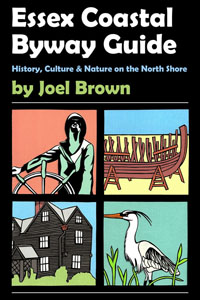
Baxterless Brown back with 'Guide'
Friday, November 18, 2011
Sometimes you can judge a book by its cover
Monday, October 24, 2011
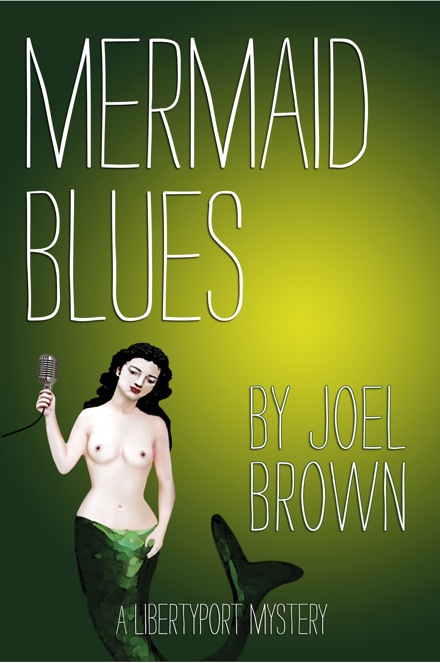
Joel Brown back with new Libertyport mystery
Thursday, August 26, 2010
Murder, mayhem in Joel Brown's Port City
Monday, August 2, 2010
Dylan Metrano: A real cut-up
Saturday, April 10, 2010
Faking Shakespeare: Easier than you think
But this barely begins to explain the successful two-year run of forgeries, each more fantastic than the last, managed by a less-than-awe-inspiring William-Henry Ireland, a teenage boy without literary training or obvious proclivity for writing, who was not wowing anyone academically and, being a young punk, someone with little in the way of real life experience. But somehow he managed to produce, among other things, love letters Shakespeare supposedly wrote to the missus, an “early draft” of “King Lear” and, in a staggering act of hubris, a “previously undiscovered” full-length play — working on dizzying deadlines, supposedly in the Bard’s own hand — all of which were gobbled up by people who should have known better. When problems started cropping up with the work — and there were plenty of sketchy things about the documents — either the “experts” managed to come up with some sort of explanation, however tenuous, to preserve the fiction, or the kid would “discover” another document that set the matter straight. It’s all so laughable that, were it fiction, the premise would be rejected out of hand. Even the author agrees — sort of. “It’s the most preposterous chain of events you could imagine,” says Stewart, who came to the issue while researching “To Be or Not to Be Shakespeare,” a 2006 piece on the authorship issue for Smithsonian. “On the other hand,” he says, “it was almost inevitable that someone would pull this kind of stunt.”
It was, after all, the Age of Forgery. People had been faking it for centuries, probably since written language became an important medium. Shakespeare himself uses it as a plot device in “Hamlet” and “Twelfth Night.” But in the 1700s, with literacy rates on the rise and the media of the day bringing the news, fit to print or not, to the masses, forgery, fraud and out-and-out bunk exploded — despite the threat of death if you got caught. And why not? It was the Age of Forgery, and there was money to be made. And Shakespeare was relatively virgin territory — and a target that almost begged for bunko: At the dawn of the Romantic era, he was famous, popular and suddenly collectible — a new phenomenon, like a rock star. But, more important, he was a virtual shadow. Most of the facts about his life were debatable. There were almost no examples of his handwriting aside from a couple of signatures on legal documents. There were no letters, no diaries, no contemporary manuscripts (the so-called First Folio came out after the Bard was off-stage, and even that was less than definitive, cobbled together from what actors could remember), let alone early drafts. The value of the literary process or author-as-celebrity was a relatively modern invention. The field for Fakespeare (con)artistry was wide open.
But that wasn’t William-Henry’s game. He wasn’t looking to cash in or make a name for himself — not at first. He wanted something way more intangible and precious: the love of, or, at least, some sort of attention from his wretched, horrible Shakespeare-obsessed father — a short, balding man with an arrogant if not especially deserved sense of self-importance, as Stewart describes him. But Samuel didn’t have much use for the boy, whom he considered a blockhead and an embarrassment. William-Henry knew how much Samuel and the rest of the culty Friends of Bill sought primary source material for the great William, and decided to give Daddy Dearest what he wanted. He started out small: ephemera supposedly from an old trunk stored in the home of a wealthy gentleman. This only whetted Samuel’s appetite. He wanted more, and the desperate, eager-to-please William-Henry obliged. Armed with a working knowledge of Elizabethan grammar, a sense of the rhythm and style of Shakespeare’s plays that came from endless readings by Samuel, and pilfered parchment and watered-down ink, William-Henry grew increasingly bold — and sloppy. The old trunk became the 18th-century equivalent of Felix the Cat’s Bag of Tricks, containing a near-endless supply of documents, including a full-length play that was produced at Drury Lane Theatre just before the whole enterprise collapsed.
Preposterous? Yeah. But, instead of being astonished by — or even a little dubious of — the flood of material conveniently falling into their laps, Shakespeare’s literary groupies shrugged their collective shoulders, saying, essentially, “Hey, it’s about time.” The search for the historical Shakespeare had become an obsession for an enraptured nation. The Shakespeare clique knew the papers had to be somewhere because ... well, because they really wanted them to exist. And there were skeptics, but they held their tongues because they wanted to be absolutely sure: An expert who couldn’t recognize the work of the Master would become a laughing stock.
Samuel went to the grave broke, his reputation, such as it was, in tatters, but believing the Shakespeare papers were real, that, somehow, his blockhead son had stolen them — even after the boy confessed, even when he admitted to the entire scheme in his memoirs/confession. Which, of course, the old boy did not believe his ne’er-do-well son was clever enough to have written. William-Henry, who had convinced himself, just before the fall that he was a superstar — and why not, people believed, for whatever reason, that the words he wrote were Shakespeare’s — hung on another four decades, churning out a few books of his own, but living at the edges. To quote the immortal one, “Lord, what fools these mortals be.”
JUST THE FACTS, MAN: Doug Stewart will read from “The Boy Who Would Be Shakespeare” at 7 p.m. April 16 at Jabberwocky, at the Tannery, 50 Water St., Newburyport. The event is free. For more information, call 978-465-9359 or log onto the Jabberwocky web. Stewart will also participate in a moderated talk with Marc Clopton, director of the Actors Studio on April 24, as part of the Newburyport Literary Festival. For more information about the lit-fest, log on newburyportliteraryfestival.org. He will also speak at 7:30 p.m. April 28 at Ipswich Historical Society/Ipswich Museum, The Heard House, 54 South Main St., Ipswich. For more information, call 978.356.2811. The illustration shows interior of the Theatre Royal at Drury Lane. The 1796 premiere of the forged Shakespeare play, "Vortigern and Rowena," was the newly expanded theater's first sellout. Thousands were turned away on opening night.
Fakespeare: The Clopton connection
A great story, this cruel little send-up, one Stewart speculates probably had been well rehearsed by the couple to torment the rapidly growing cult of Shakespeare’s enthusiasts knocking at their door, but it didn’t ring the same kind of bell for the Ipswich author as it does on this corner of the North Shore: Yup, Newburyporters, we’re talking about one of those Cloptons. Marc Clopton, founder of the Actors Studio and a fixture on the local theater scene for close to two decades, is a direct descendant of Hugh Clopton, who in 1490 was Lord Mayor of London and whose family palled around with Shakespeare, even giving the playwright a place to live during his last days on this stage. That would be the previously mentioned New Place, which, it turns out, was built by old Hugh Clopton. Family lore also has it that the Bard used Lady Anne Clopton — “some sort of great-great-great aunt or cousin or something,” he says — as a model of Ophelia, who goes off the deep end after Hamlet, her beloved, butchers her father. She, like Lady Anne, drowns herself. Why did she do it? “Unrequited love, same old story,” he says.
Clopton will be moderating a discussion with Stewart about “The Boy Who Would Be Shakespeare” during this year’s Newburyport Literary Festival. The book looks at the strange-but-true story about how William-Henry Ireland, Samuel’s son, pulled off one of the greatest literary hoaxes in history, forging everything from supposed love letters to Anne Hathaway to supposed first drafts of “Hamlet” and “King Lear” to a new, previously undiscovered play by the Bard himself.
And, for the record, Clopton’s family eventually moved on to Colonial Virginia in the early 1700s, where they became prosperous slave owners, and Clopton House, a rambling four-story manor with seven chimneys and just as many gables, has been turned into condos.
JUST THE FACTS: Doug Stewart will discuss “The Boy Who Would Be Shakespeare” in a moderated discussion with Marc Clopton at 10:30 a.m. April 24 at the Annunciation Greek Orthodox Church, 7 Harris St., Newburyport.
Wednesday, April 7, 2010
Tough take on state of Protestant church
MacDonald, correspondent for the Christian Science Monitor and the Religion News Service, is not especially surprised by the reaction. He says he expected there would be some “blowback” from “Thieves in the Temple: The Christian Church and the Selling of the American Soul,” a tough tract that argues that the Protestant church is falling down on the job, that, by caving in to pressure to fill the pews, it is responsible for an easy-going, feel-good orthodoxy — or, as the author would have it, a “warm, welcoming, happy-clappy spirituality” dictated by market forces, not religious theory or necessity.
So what’s all the fuss about, then? Not what you might expect. You’ve got the usual suspects and vices: Sex and drugs and rock and roll. Divorce, cheating, porn are thriving not only among the heathens who desperately need to be saved, but also in the Christian community. A bad thing, but not the focal point of “Thieves.” MacDonald, who will speak this April 9 at Jabberwocky and a couple of weeks later in a moderated discussion during the Newburyport Literary Festival, says the church, in an attempt keep the pews filled, has all but abandoned what is the backbone of the religion; that churches are pandering to the flock, no longer challenging people to be better, that church leaders are no longer beacons of the faith, but companions for the journey, that important church rituals — like baptism and Lent — have been watered down to the point that they are, if not exactly meaningless, then at least not challenging, not edifying — like the old joke about the Unitarians, who usually have enough of a sense of humor to take it, being the “Church of the 10 Suggestions.” The backbone of the church, he writes, the ability to shape people, is being jettisoned as pressures grow to deliver ever “more pleasing religious experiences,” abandoning the “unique authority” it has long enjoyed, an authority that once allowed the church “to push back against the tide, to challenge the conventional wisdom.”
No, he’s not a party-pooper, not advocating a “dour, humorless spirituality,” he says, “but ....” But what? “But if everyone panders,” he asks, “who will elevate?”
Effortless salvation
MacDonald argues that churches, in their competition for souls to save and, to get that job done, are essentially handing out deck chairs and passing out pitchers of pina coladas — if not exactly dumbing down the faith, then doing their best to make spiritual demands seem, well, not so demanding. Problem is that we’ve gotten kind of soft over the past couple of decades of pandering — and that it’s going to take a lot more than rearranging the deck chairs. Worse, buyers rule in the religious marketplace. Make too many demands, they’ll tune you out or, worse, move on. And, increasingly, that’s what they’re doing. The number of people switching religious affiliations is a staggering 44 percent — and they’re apparently shopping around, not just for hot-button religious reasons, like abortion and gay marriage, but because it scratches some other societal itch, for an increasingly self-absorbed laity and church hierarchy desperate for love, and willing to provide a “pleasant religious experience.” And woe to those who do not heed the demands of the busy modern-day religion consumer, because he’ll just pack it up and go elsewhere.
The book focuses on so-called mega-churches with congregations in the thousands, churches that feel like malls, with Starbucks, Subways, cafes, bookstores. more prevalent in the Midwest and South than here, churches that combine old-time religion, old-school hucksterism and modern advertising. But the pretty-as-a picture white churches with picket fences on New England village greens are not exempt.
All this comes at a time when, according to polls, a super-majority of sinners believe the church’s authority is waning and even more say — or tell pollsters, anyhow — they want it to have a bigger role in their lives. So the good news, so to speak, in this is that since religion has taking a pro-consumer stand, all it would take to get the flock back on track is if people demand something better, something more meaningful and fulfilling. Do they mean it, or are people just telling pollsters what they think they’re supposed to say? Are both the spirit and the flesh willing to do what needs to be done? Is the will really there? ”I hope it’s in there, I think it’s there,” he says. “ We need the church to do its job ... If they demand it, they’ll get it.”
The view from here
MacDonald grew up in Marblehead. He holds a Master of Divinity degree from Yale University and Bachelor of Arts in American history from Brown University. He’s an ordained minister in the United Church of Christ. He landed in Newburyport about a decade ago, just about the same time as he began writing about religion, after taking a post with Union Congregational Church. He continued to do journalism by day and religion on nights and weekends over the next four years. The freelance work kept growing, the demands of his ministry did not lessen, and “something had to give,” he says. He still keeps the collar, filling in for vacationing ministers, officiating at weddings, funerals — even stepping up to the pulpit from time to time. (He’ll be leading services at 10 a.m. April 11 at First Parish Congregational Church in Manchester-by-the-Sea). While at Union Congregational, he received religion journalism’s top award, the Templeton Reporter of the Year prize from the Religion Newswriters Association. He’s also been honored by the American Academy of Religion for in-depth reporting on religion. The journalism/religion career convergence represented “the big picture idea of what I wanted to do,” says MacDonald. “The ministry informs my writing. I’m still balancing the two. I still do both, not at the same time. It’s two sides of the same coin. In both, you’re seeking truth. In journalism, listen carefully and verify what you’ve learned. In religion, the questions are bigger — who we are, why we’re here, who created us. But it’s still about speaking the truth.” He started thinking about writing this book six or seven years ago, as the trends began to emerge in his work as a journalist — 800 to 1,000 words at a time.
His years at Union Congregational are instructive. MacDonald, who served from 2000 to 2004, was, essentially, grabbed up by a former corporate headhunter who was living in the area and used “all of his corporate tricks” to make a big impression, to seduce him, distracting him from the fact that the modest building with the peeling paint, without an office for the minister, would be his home — and that few if any from his congregation ever lived in the happy-shiny glitz of riverfront Amesbury. After taking the job, he discovered that his flock wasn’t especially eager to do the kind of heavy spiritual lifting that MacDonald sought for them. (“There was some resistance there,” he says, “it’s true.”) But, on the other hand, the church did have a feedback committee to let him know what they were looking for: shorter sermons, anecdotes and lots of humor, so folks could get out of there at a decent hour — and, he writes, “leave with the glow that comes from knowing God loves them just the way they are.” The interview was to see if MacDonald was a “fit” with the unique culture of the church. He says he felt like he was trying out for poster boy for the congregation.
A way home
In the end, “the message is still about grace,” he says. “We are saved by the grace of God, not by the work we’ve done along the way.” But there’s so much more that could be done if people could get past the happy-clappy, religiously flavored experience. There’s a real hunger for deeper spirituality, he says. There are tons of books exploring spirituality, and people are eating them up.
Give them a chance, he believes, and people will come around. He points out so-called “green” cars, whether it’s so owners can look down their noses at people who can’t afford to “save the planet,” or because they actually think this will save the planet. It’s one of the fastest-growing niches in business. Same goes for “socially responsible investing,” once thought fringie and a model that was once considered a joke. “In religion, it’s actually a better fit. People always want to lead the good life, they want to live in a way they feel proud of ... it’s right there for the taking,” MacDonald says. But nothing’s going to change until there’s “a bit of a shift” in the current mindset, until someone raises the issues and risks being called a party-pooper.
“People would like to believe things are rosier than they are,” he says. “It’s an important topic, the state of the church today.”
JUST THE FACTS, MAN: G. Jeffrey MacDonald will read from “Thieves in the Temple: The Christian Church and the Selling of the American Soul,” at 7 p.m. April 9 at Jabberwocky Bookshop, 50 Water St., in the Tannery. The Port author will also discuss the issues raised in the book during a talk, in dialogue format, at 2:30 p.m. April 24 at First Religious Society Unitarian Universalist, 26 Pleasant St., as part of this year’s Newburyport Literary Festival. For more information about the Jabberwocky date, call 978-465-9359. For information about the lit-fest, log onto newburyportliteraryfestival.org.
Friday, January 29, 2010
Ooh-la-la: Romance and seduction, the French way
Who would have thought that first thing in the morning, before finishing the first cup of coffee of the day, I’d be talking about girlie stuff like sexy lingerie and the French art of love with the lovely, curvy Jamie Cat Callan, and ... No, no, no, snookums. I had a legitimate reason for chatting her up while you were still asleep. She’s the author of (we need to pause here for a chuckle en Francais: hoh-hoh-hoh) “French Women Don’t Sleep Alone: Pleasurable Secrets to Finding Love,” and she’s coming to town next week to talk with the ladies from the Port City Women’s Club, and, like it or not, for the overwhelming majority of French filles Callan interviewed, undies are a key part of Aphrodite strategy.Now, we’re not necessarily talking about the kind of frilly and sexy (and very uncomfortable looking and quite possibly dangerous) items that you might find in a Frederick’s of Hollywood catalog, or so we’ve heard. But the pieces have to be nice — and they have to match. And you’ve got to turn yourself out, knicker-wise, every day, no matter if you’re anticipating, or hoping for a romp — er, a night of romance, or just popping into the car to run an errand. Not just because it makes you feel pretty or because you’re worried (thanks, Mom) about being seen in tattered underoos if, God forbid, you’re in an accident, but because it’s the first thing you put on in the morning, it is the first step in how you present yourself to the outer, physical world and, in essence, is an indication of how you relate to it. Immediately. And, beyond that, a simple step like lingerie choice helps build inner confidence. And that, the author says, not the bloomers, is what really gets the pheromones jumping.
During her February talk at River Merrimac Bar and Grille, Callan will serve up the straight Continental dope on flirtation and romance (the French raison d’etre) as well as marriage, deconstructing the French fairer sex’s rep for being so sexy and mysterious and intriguing — so ooh-la-la — and explaining why accessories like scarves, boots and skirts (and lingerie, of course) are essential building blocks for romance. And what makes her such an expert on the subject? With a name like Callan, she’s obviously not French. True enough. The author, whose middle name, Cat, is actually a nickname from her teen years, is half-Irish and blond. But her maternal grandmother was very definitely French, and looked the part. ”She was tall and slender with black hair, just a stunning woman,” Callan says, “She always dressed so beautifully, so elegantly, always with scarves, always turned out in heels, stockings. She was incredibly stylish.”
As a young girl, Callan spent her summers with Grandmere, who schooled her in the ways French women find and keep love, but she didn’t put it all together — the ideas about romance and seduction and style — until she started working on “French Women” a couple of years ago. She had been bouncing around a bit, writing three young adult novels in the 1980s, chasing after a master’s degree in film at UCLA, writing some screenplays and serving as an assistant to Meg Ryan in the 1990s, returning home to Connecticut to teach writing to adult students at Fairfield University (which is where she met her hubby, William Thompson, a climate change scientist at Woods Hole Oceanographic Institute, who was taking a class). Then, in one of those “light dawns on Marblehead” moments a couple of years ago, Callan, who just celebrated her 56th birthday last week, realized that she has always loved to travel, that she’s always been fascinated by French culture and that she’s a writer and that she could put it together into one enjoyable package: Travel to France and write about French topics. “My only regret is that it took so long to put these things together,” says the writer, who will be heading back to France in the fall, to research (“It’s not a vacation,” she says) “Bonjour Happiness,” her next book. “I just wish I had thought of it earlier.” She’s also working on a memoir about being a femme d’un certain age, growing up with an “impossibly French” grandmother.
The book, called “adorable” by literary sexual provocateur Erica Jong, isn’t all garterbelts and push-up bras and makeovers. It also looks at the French art of flirtation, explains why French women always feel sexy and where and how they meet their men, especially since they don’t date. Huh? Nope, instead of the usual expensive (and very high-pressure for both parties) date, they go to dinner parties, which tend to be casual affairs, so to speak, allowing the time and space to do the romantic, emotional stripteases they do so well. Or so we hear. Or fantasize about. (Oops, sorry, snookums. Just speculating. But, you know, I think French girls would be more understanding about things like that.) It also gives them the chance to duck out if it isn’t going to work out. The book also includes recipes — for food and, perhaps, seduction.
The book “connected the dots in my relationship with my grandmother,” says Callan, who teaches popular fiction at the University of Southern Maine’s Low Residency MFA Program at Stonecoast. “I had no idea that my grandmother was going to be my muse.” And, for the author, it’s all good: “I’m having the time of my life,” she says.
JUST THE FACTS, MAN: Jamie Cat Callan, author of “French Women Don’t Sleep Alone: Pleasurable Secrets to Finding Love,” will speak at 6:30 p.m. Feb. 1 at River Merrimac Bar and Grille at the Tannery. The event is free and open to all area women. The Port City Women’s Group came together four years ago, evolving from a small group of women sharing stories about themselves to a business networking group. They meet the first Monday of every month.
MORE MORE MORE: For more information about the author, check out her Web page. To watch a short interview with the author, check out this video.
Wednesday, November 11, 2009
Diary of a band ... and community
Published by Burst & Bloom in Portsmouth, “All My Friends” follows Tiger Saw’s zig-zag musical history, from the pretty, melodic minimalism of its early years to the community-building choruses and singalongs of the middle years and, ulitmately, the controversial about-face of its basement soul — a decade-long run of some 800 shows in a dozen countries. In clubs, galleries, even in the branches of an oceanside fir tree, the anecdote that the book opens with — or, as author, and Tiger Saw founder Dylan Metrano says, “any place people will gather to listen to music,” it is the story of a restless, constantly evolving band, and like-minded colleagues and road dogs who have since become friends — and a look at the scene, a way of life with rewards that do not translate into bottom line. The book comes with a 13-track CD featuring new takes on old TS tracks performed by the musicians who have been part the story, from Jason Anderson and Moons of Jupiter to Picastro and Quiet Bears.
And the hand puppets? Form follows function. The book, part tour diary and part oral history, which would make for a confusing reading if you did it straight and an awkward and, not to put too fine a point on it, silly reading if you attempted to do voices. Odd as it may sound, a puppet show seemed “a more natural way” of presenting such material, says Metrano, during a recent telephone interview. He’s in Annapolis, between shows on a two-week tour with Tiny Fires, a new band featuring Metrano, Guy Capecelatro III, Jeremy Robinson and Jerusha Robinson, which has been tramping through the Midwest and up the East Coast, playing every night, without travel dates, to support their self-titled debut album. Metrano’s Nov. 13 reading at Jabberwocky represents the last date on the current tour and the start of a brief break before the next, in which Tiger Saw will add two notches to its country total as it stomps across Australia and New Zealand with Castanets and Alps. It's a crazy schedule, but "if you're not playing, you're paying,” Metrano says. “You do what you can, try to get in as much as you can. Lots of places to be, lots of people to see. It's good to keep moving, I guess. It feels right.” They’ve done the puppet-thing at a couple of the quieter venues on the tour. “People have been receptive,” Metrano says. “but it’s definitely a work in progress.”
Diary of a band
Working with handwritten tour diaries he's kept since putting together Tiger Saw at the turn of the century, Metrano took his first shot at getting together some kind of history about Tiger Saw’s first decade about a year and a half ago, but, first impression, it just didn’t sing. “It was tedious and boring stuff ... that no one in his right mind would be interested in if he wasn't in the band.” On the other hand, as he pushed forward, the road stories started to look “like something.” A book? He wasn’t sure. He passed on what he had to Greg Moss, his old bandmate from the Port proto-punk band Hamlet Idiot in the late 1980s and now a professional playwright. He agreed: There was something there. He suggested that Metrano flesh out the story with first-person accounts, something along the lines of “Please Kill Me: The Uncensored Oral History of Punk” by Legs McNeil and Gillian McCain. The project started jelling after that.
It's a small, in some ways unremarkable, story, without the kind of big-splash sex-and-drugs-and-rehab-n-roll in “All My Friends” that dresses up Behind the Music bios. There's none, actually. And no groupies or hotel rampages. What makes it work is the fact that, despite its lack of excess, the story is so rock and roll — though definitely not the rock fantasy that usually springs to mind. It could be the story of any band coming up, trying to make it — and doing it on its own terms, without corporate bankrolls. It’s about hard work and hustle and DIY necessities, being jammed into a vehicle with all your gear and your bandmates and crashing on someone's couch and staggering weary-eyed to the next gig. It's about community.
“Few oppornuties are just handed to you. You make it on hard work and with the help of your friends," Metrano writes. "I think I’ve learned something about myself doing it. We play what we want — and that feels good.” It is an honest, unblinking account, not only of the work it takes, but also of the conflicts within the band, which led, first, to the departure of original member Juliet Nelson, the cellist and vocalist who was, in large measure, responsible for the Tiger Saw sound — and even Kimchee Records executive Bob Dubrow's stinging dismissal ("I don't like R&B dance kockoffs done by white boys and girls that sounds like it's being done by white boys and girls.") of late Tiger Saw's party vibe. "It would be silly to exclude it," he says. "There will always be conflict within a group" — especially, he says, when you have to deal with someone like him, who is "very particular about what I'm trying to create."
Metrano, who hasn't performed in Newburyport since the 2007 show with Scary Mansion at the Firehouse. (“I don’t know know if there's much of an audience there anymore, or if there’s even a scene,” he says. “I’m not as connected as I used to be.”) says the book, of course, is also his story. “I was in my early 20s when I started the band," he says. "Now I'm in my early 30s. I grew up with this band. I don't know if I wanted it to be this, I don't know what I wanted it to be. I was interested in playing music, but also in writing and acting. Music ended up taking over. I don’t know where I'll be in another 10 years. I could have a different life, but it's not important to figure it out. I know what I want to do now.”
JUST THE FACTS, MAN: Dylan Metrano will read from “All My Friends Are Right Here With Me, A Decade in the Indie Rock Underground,” at 7 p.m. Nov. 13 at Jabberwocky, located at the Tannery, 50 Water St., Newburyport. The event is free. For more information about the reading, call 978-465-9359. For more information about the band, look here.
Monday, September 7, 2009
BFF: A decade on the road with Tiger Saw
To be perfectly honest, something a reporter should never do, I thought Tiger Saw was just a phase, a patch that Dylan Metrano would eventually work through, probably quickly ... Yeah, yeah, I know, but it made sense at the time. He’d just come off of several years working with Hamlet Idiot, an intense, raucous and proto-punk band that he dismisses now as a paeon to youthful excess and enthusiasm, but was pretty bitching, if not exactly popular or polished, back in the day. The band released a dozen cassettes and a couple of CDs, never really finding its audience, but making a lot of righteous noise. Then Metrano packed his bags for the left coast, the spiritual home for fresh starts. When he came back about a year later, he unveiled Tiger Saw, a project that could not have been more different, leaving behind the furious, confrontational style of Hamlet Idiot for soft, yielding slowcore, for songs that were sweet and melodic, sad and beautiful, almost like lullabies.It's hard to believe that was ten years ago, a decade in which the Newburyport-based and psychologically centered Tiger Saw has not only persevered, but thrived, releasing seven albums and becoming a road-hardened touring band that, despite its roots, is almost never home. And a decade in which the band evolved, undergoing extensive changes that completely changed its musical direction, from the hushed conversation, boy-girl/call-responses of "How To Be Timeless Tonight," to the joyous, celebratory, everybody-all-together “Sing,” to the abrupt, musical left turn of "Tigers on Fire," which saw the band sporting a horn section and playing dance music — basement soul, if you will. And the personnel? Forget about it. Once you get past the late-middle period, you need a scorecard to keep the players straight — especially when you include the live configurations.
And that's exactly what Metrano has done in "All My Friends Are Right Here With Me: A Decade in the Indie Rock Underground." The book, just published by Burst & Bloom Press, is a blow-by-blow account of the ascent — and transformation — of the band. Part travelogue, studio diary and oral history, "All My Friends," which takes its name from a song from "Sing," is based on a decade of tour diaries and dozens of interviews, with first-person accounts of tours with Kimya Dawson, Castanets, Jason Anderson, Viking Moses and The Hotel Alexi and detailed remembrances by members of Dirty Projectors, White Hinterland, Little Wings, Songs: Ohia and Tarentel, and many others. It also also comes with a CD of Tiger Saw covers by friends and collaborators like Jason Anderson, Cake on Cake, Guy Capecelatro, Moons of Jupiter, Annie Palmer, Picastro, Gregg Porter and Quiet Bears.
Tiger Saw will be touring with South China and The Wailing Wall to support the book. Select shows will feature dramatic readings performed by a collection of home-made puppets. There are no Newburyport dates on the schedule. The closest shows are in Cambridge and Portsmouth. The tour schedule is at http://tigersaw.wordpress.com. The book can be purchased at http://burstandbloom.wordpress.com/order/